It’s the first Field Notes Friday of October; let’s get back into a routine!
Here are my notes from a trip with my mum and my auntie to Harrogate Flower Show. It was at Newby Hall, which is a huge country house with absolutely amazing gardens near Ripon. It was my first visit, and it was incredibly busy with people exhibiting giant vegetables and selling their flowers and wares; great, but oh my goodness, a bit overwhelming! We found a peaceful haven away from the tents and the bustle and explored the permanent gardens.
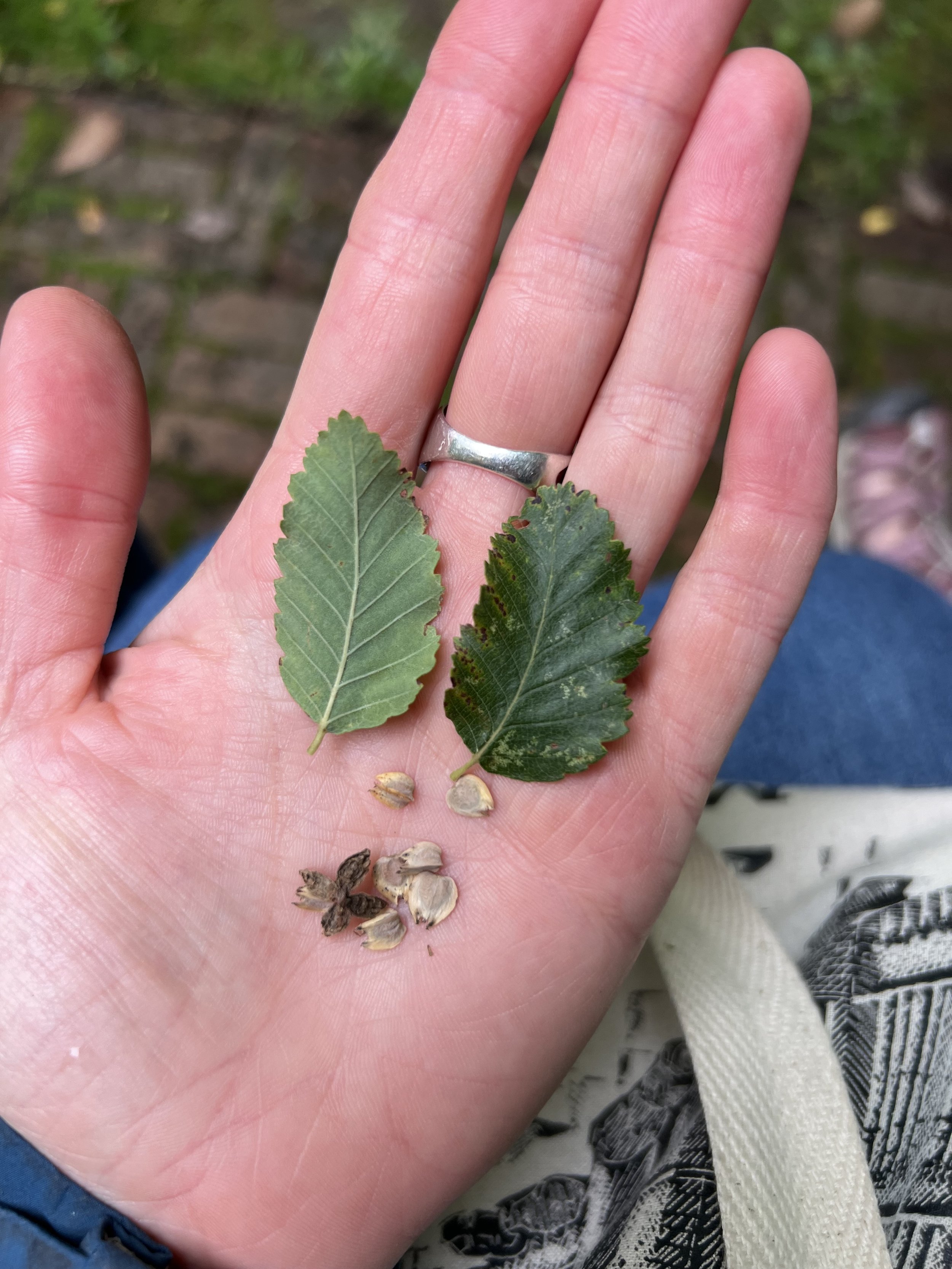
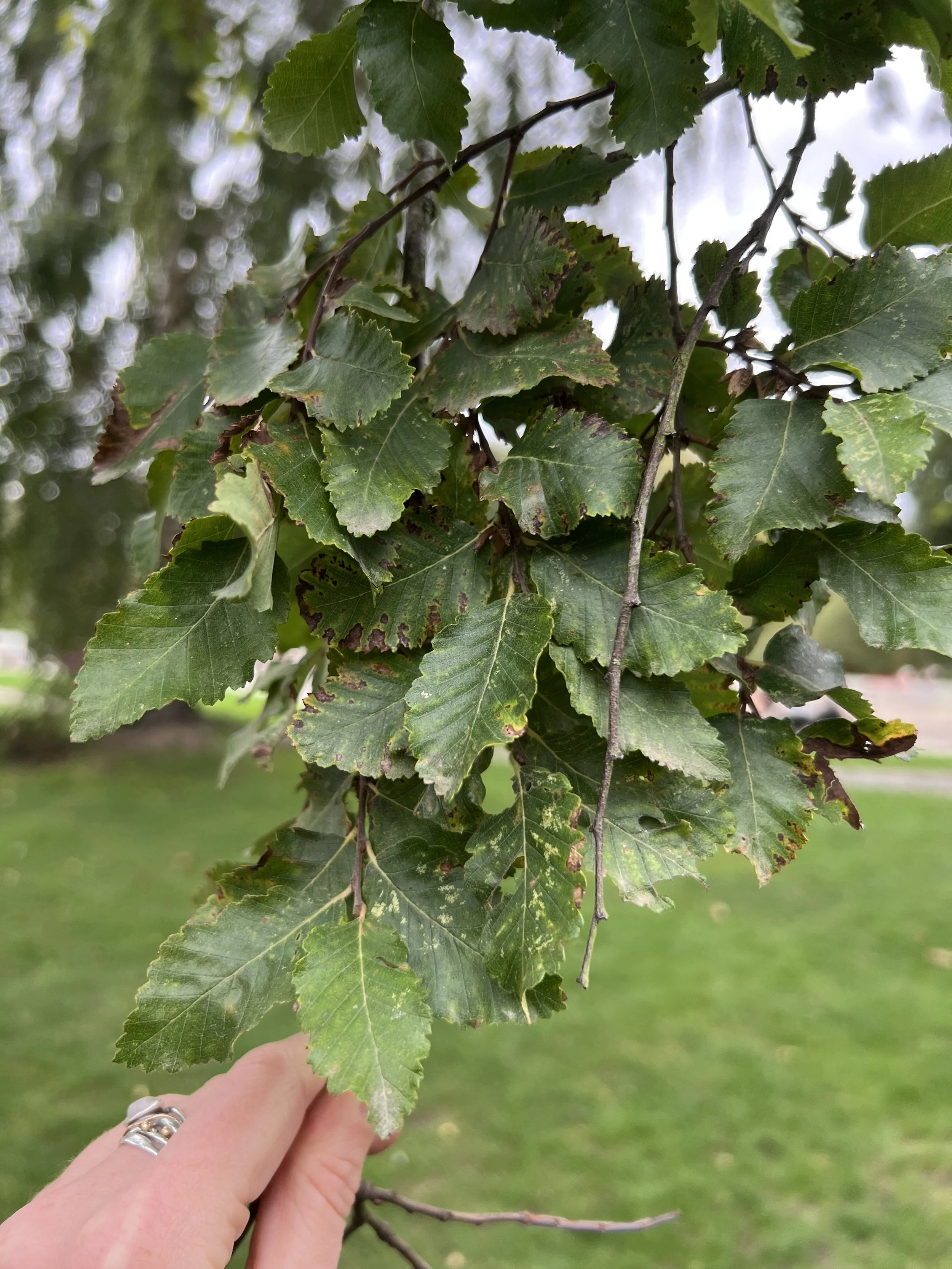
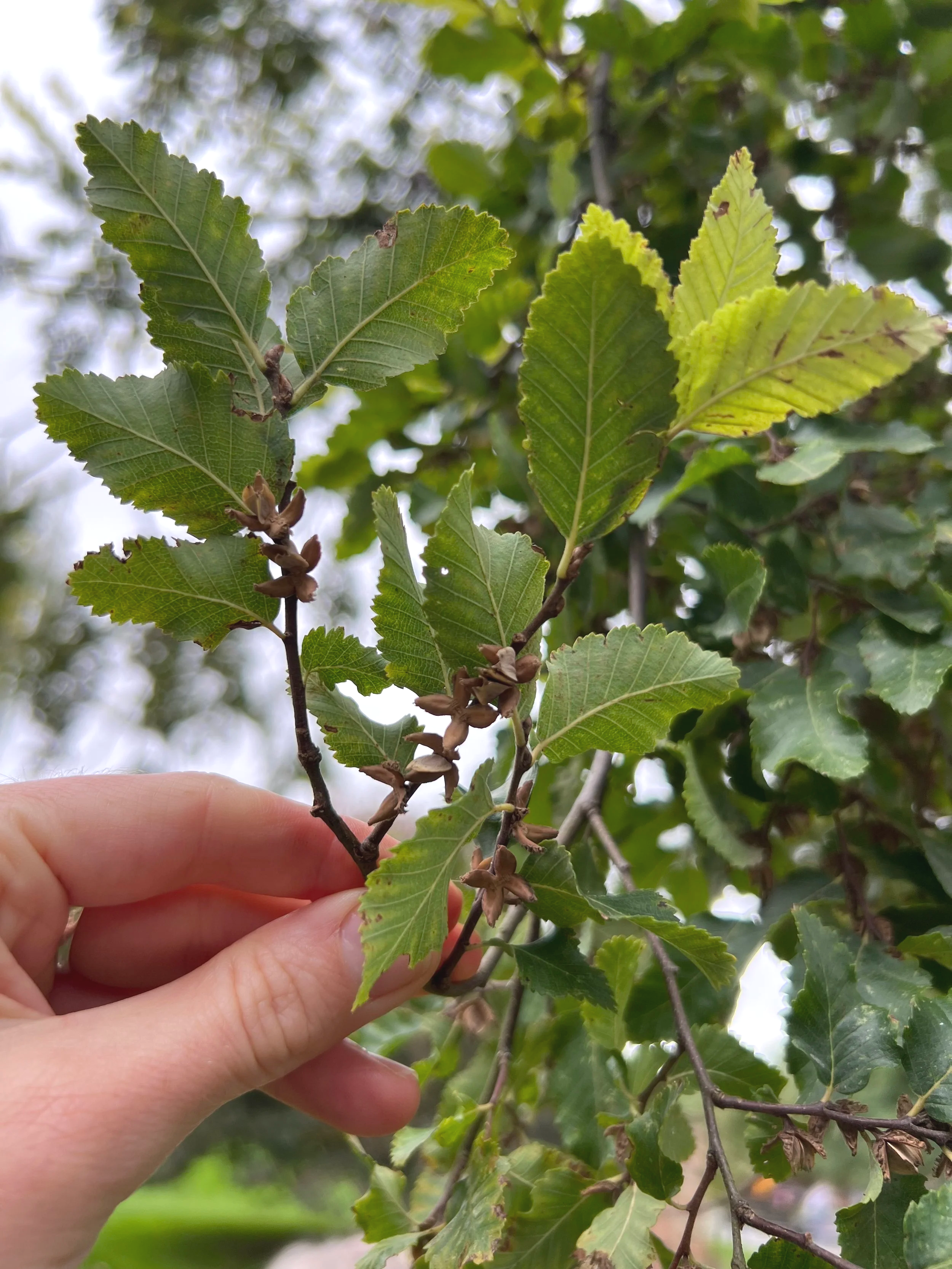
Just opposite the land train and one of the many ice cream stands, a tree caught my eye. Those small, crinkled Beech-like leaves looked familiar. Upon closer inspection, it was adorned with tiny little beechnuts. My heart jumped! Is that a Nothofagus?
Beeches: European (Fagaceae) and Southern (Nothofagaceae)
I took some photos, collected a couple of leaves and a tiny seed casing that unfolded to release the nuts into a jam jar, and carried them with me until we found the “Gardeners Hub” to ask an expert. The head gardener confirmed, after examining the specimen and listening to my excited description of its characteristics and location, that the tree was, indeed, a member of the Nothofagus genus.
After arriving home, I uploaded some photos onto my Instagram story to ask my Latin American friends if anyone could help me identify the species. I suspected the Coihue (Nothofagus dombeyi) because of its tall trunk and fissured bark, but the botanist Nico Lavendero confirmed that it was a Roble Beech (Nothofagus obliqua). For context, for those of you who don’t know me personally, I’ve travelled (and lived for a while!) in South America, volunteering on agro-ecological farms, nature education projects, developing my artwork portfolio, and, I realise now, recovering from severe burnout from science and academia.
Nico and I met on a Botanical course with Fundación Chilco in Vodudahue, a truly magical place nestled in the fjords of Chilean Patagonia. Counting my blessings for ever having set foot in that mystical realm of our planet! When I arrived there, I remember being hit with a deep sense of nostalgia. It reminded me of Scotland: the lochs, the ferries, the trees, the smell in the air and that soft, fresh drizzle that blushes your cheeks. With the other participants, Nico and the director of the Foundation, Josefina Hepp, we discussed many connections between Chile and the Royal Botanic Garden Edinburgh. Many Chilean plants are collected and grown there due to their similar climatic conditions: cool, damp and temperate. It made sense why it reminded me of home; both places share my favourite habitat: the temperate rainforest. This sequence of events made me realise I need to go back to the UK and figure out what to do next.
But anyway, I’m rambling! Back to the Beech. Here are my field notes.
Beech Field Notes 💚
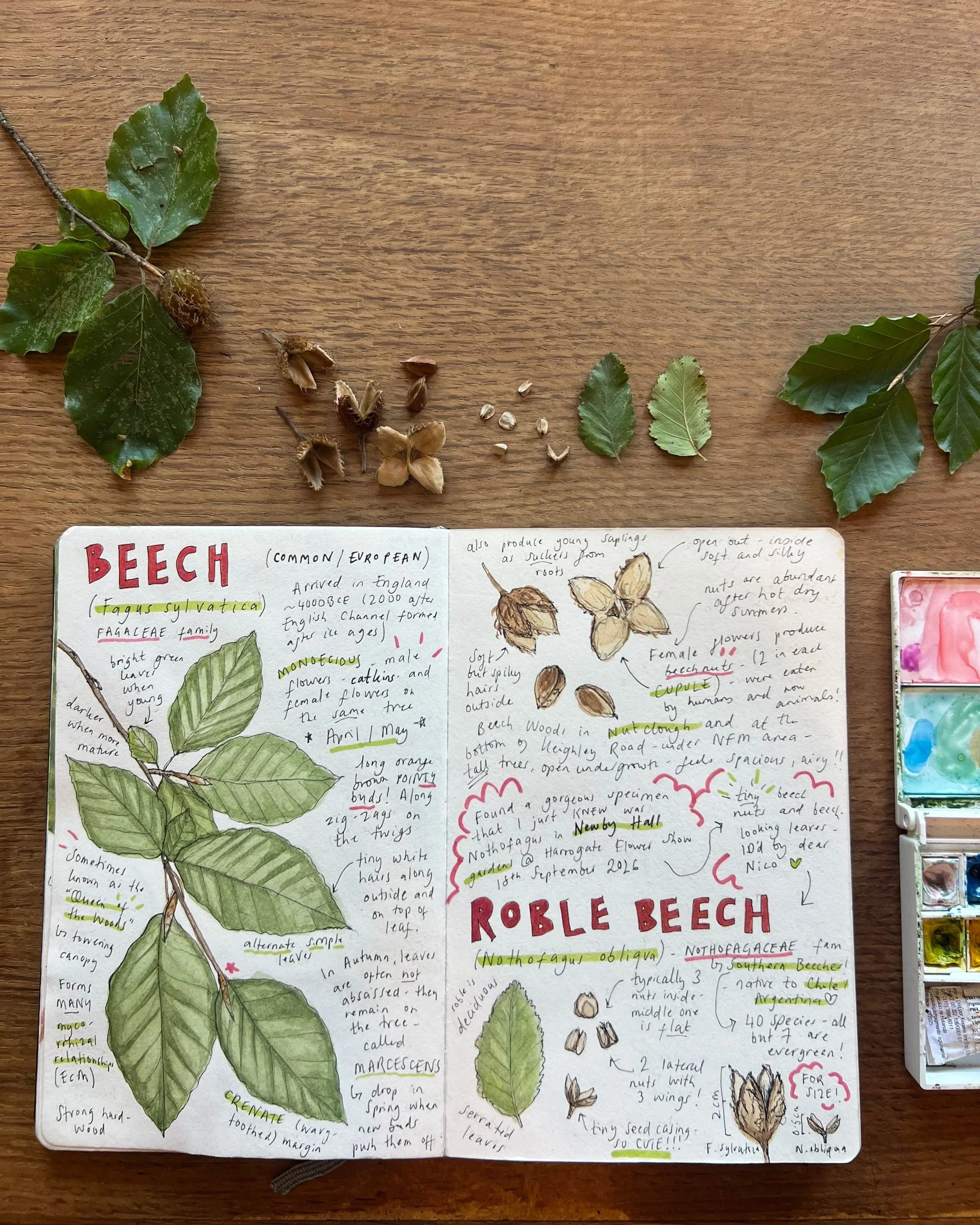
From those travels in Patagonia, I recognised the Nothofagus genus of the Nothofagaceae family: the Southern Beeches. But first, let’s talk about one we are all familiar with. The Beech us Brits know and love is the Common or European Beech, Fagus sylvatica, a member of the Fagaceae family. The Beech is considered to be native to the UK, but evidence has shown that it migrated up from Europe around 4000 BCE.
Our dear F. sylvatica is recognised by its simple, alternate leaves, which have crenate (wavy-toothed) margins and are covered in tiny white hairs. It has long orange-brown pointy buds that zig-zag along the stem. It is monoecious, so the male catkins and female flowers are on the same tree, and it is wind-pollinated to produce its characteristic beechnuts in a casing, which I learned is called a cupule. They open out into a gorgeous silky 4-pointed star and release their nuts.
Interestingly, in autumn, Beech leaves are often not abscised, so they remain curled up and brown, attached to the tree until the next spring when new buds push them off. The cellular layer that forms and causes them to drop off fails to fully form, so instead of falling, they retain their dead leaves; they are marcescent. I’ve definitely noticed that before in the Beech woods, have you? Keep your eyes peeled over winter!
What about the Southern Beeches? They belong to a different family, the Nothofagaceae, and the genus Nothofagus contains around 40 species, found mainly across the Southern Hemisphere, particularly South America and places like Australia and New Zealand. Their distribution reflects the breakup of the ancient supercontinent Gondwana, when those landmasses were still connected. So, like the prehistoric Araucaria (check my notes!), they’re living fossils that have been living on this planet for millennia. Cool!
In Patagonia, several species form vast forests that, to this day, in some remote locations, are untouched by humans. That’s why I was drawn to this part of the world; it is one of the only places we’ve got left with wild, untamed Nature. The Lenga (Nothofagus pumilio) can grow right up towards the treeline, becoming increasingly twisted and stunted by the wind and cold. Ñire (N. antarctica) is particularly tolerant of harsh conditions and able to grow in boggy or dry environments. And then there's Coihue (N. dombeyi), which can become a huge forest tree; it likes water! And of course, there’s the one I found in Ripon, the Roble (N. obliqua), with its tiny beechnuts, which cost less energy to produce but are easier to disperse by wind as they’re lighter! Some of these species are evergreen, while others are deciduous, turning beautiful shades of yellow, orange and red in autumn. It’s absolutely magical to behold. These inspired one of my paintings. Have a look at the plant-spiration, and its available to buy here if you like it!
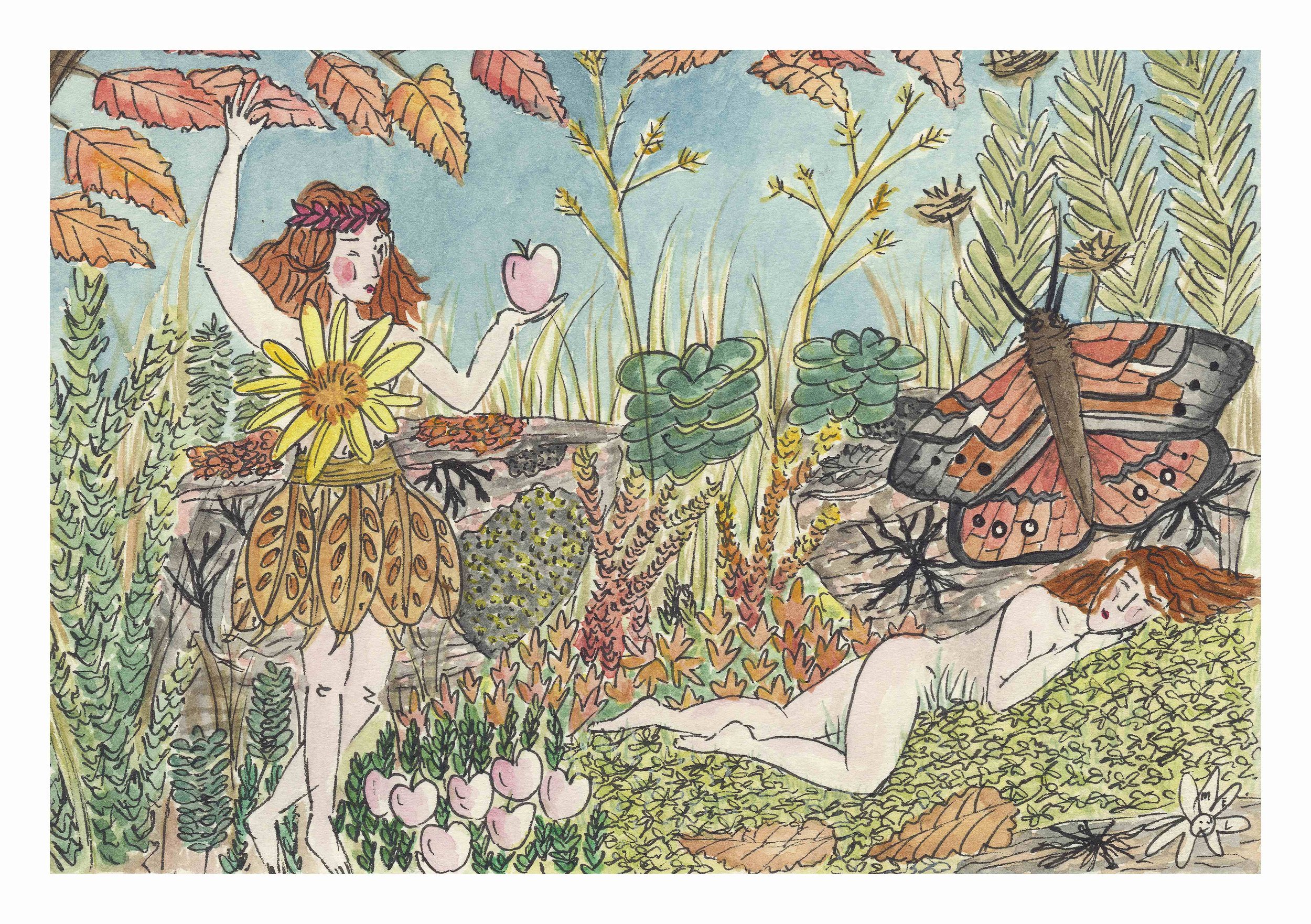
Peace is Joy Dancing, 2022.
Hey Nature Updates
September has been a bit of a transition month, adjusting to life in Hebden and new part-time work. I’m working at another good old wholefoods shop, and its the start of moss planting season! In the winter, I do a little bit of flexible moorland restoration work, doing something good for a bit of cash. Honestly, getting into the moss planting flow on the moors is incredibly good for your brain, albeit exhausting for your body.
I took part in the Craft and Canvas plein air competition for the first time and did a super speedy and BIG Nature Notebook-style study of the trees in Hardcastle Crags, my fave pocket of temperate rainforest close to home in Hebden Bridge. I was lucky enough to receive a prize for my work being “highly commended”, 4th place! Happy with that!
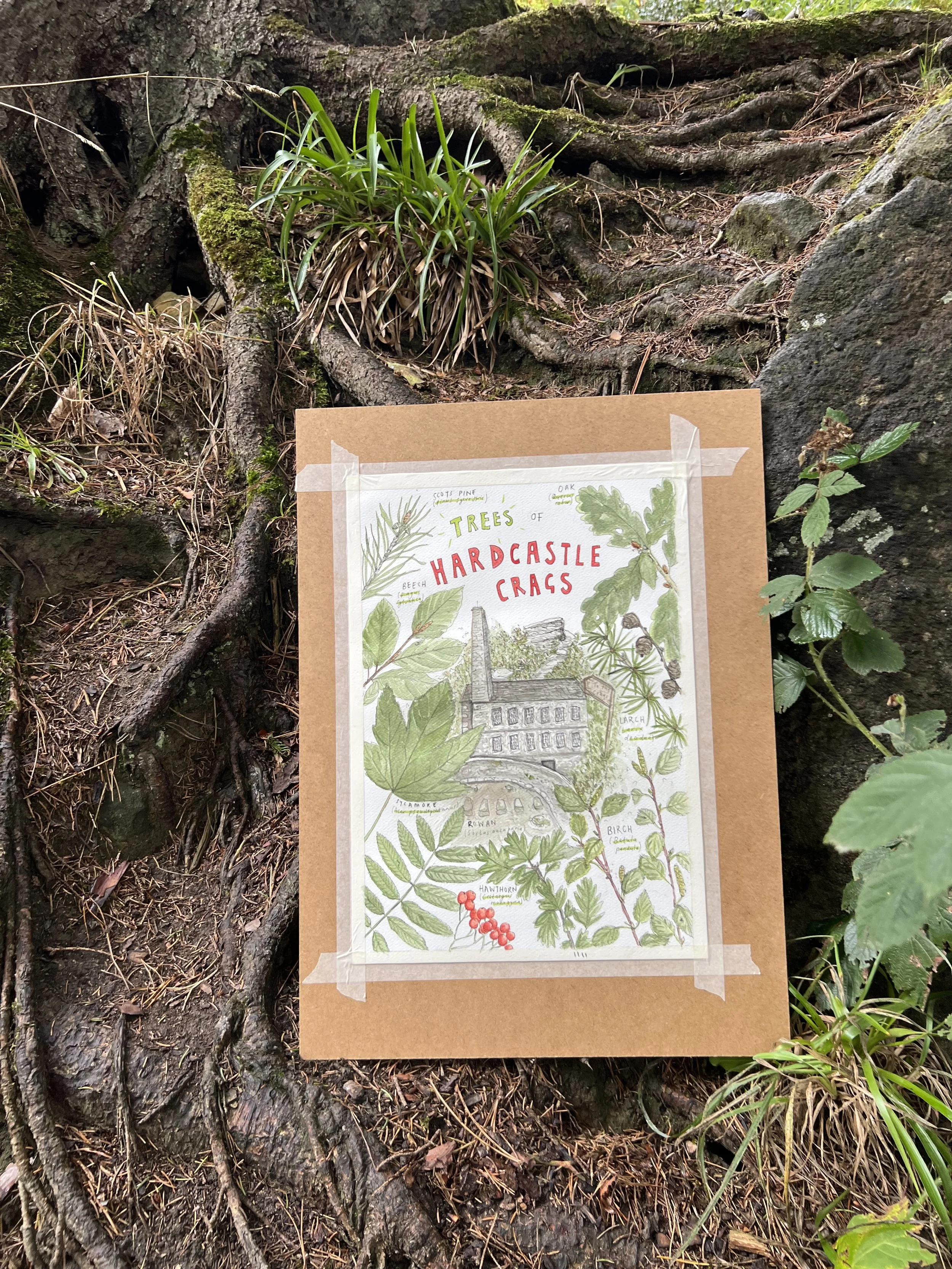
I’m preparing for the Mill Town Arts Autumn fair; catch me next weekend at Hebden Bridge Town Hall, Saturday 10th and Sunday 11th October, 10:30-4 pm. There’ll be the bits that are available in my shop, and some new bits like prints of the trees ^ and some of my Nature Notebook studies. Come down and say hello!